
5 Common Myths About Data Centers
Data centers generate plenty of strong opinions, and some of the concerns communities raise are legitimate. Water, electricity, noise and local impacts are all things communities should ask about before a project gets built. But some claims go further than the evidence does. Here are five common myths and what the research and real-world experience actually tell us.
Updated August 24, 2026
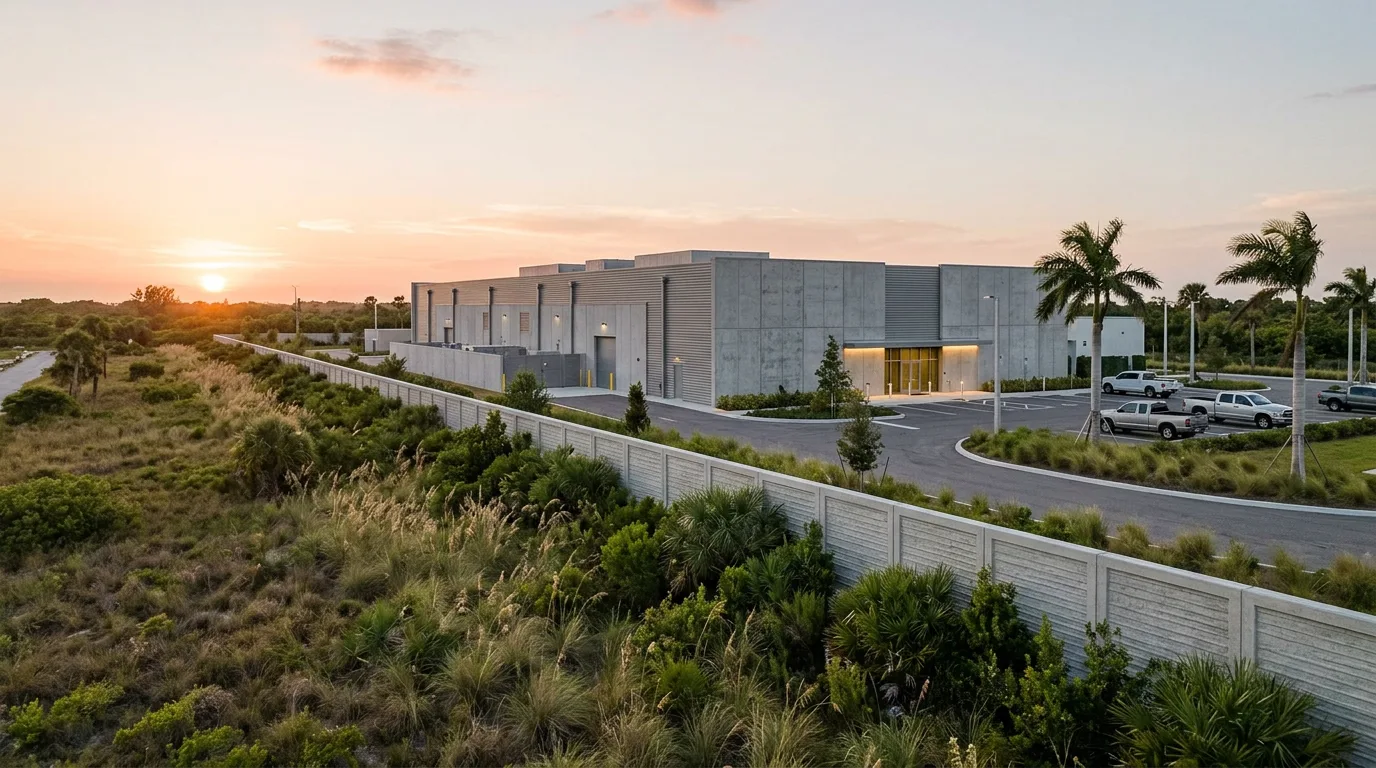
Data centers generate plenty of strong opinions, and some of the concerns communities raise are legitimate. Water, electricity, noise and local impacts are all things communities should ask about before a project gets built.
But some claims go further than the evidence does. Here are five common myths and what the research and real-world experience actually tell us.
Myth: A single data center will drain a county's water supply dry.
Fact: How much water a data center uses depends heavily on how it is designed and cooled.
Traditional evaporative cooling can consume significant amounts of water. But the industry is increasingly adopting closed-loop and liquid-cooling systems that recirculate cooling fluid rather than continually consuming water through evaporation. These technologies are becoming particularly important as newer, more powerful computing equipment generates more heat and requires more efficient cooling. The U.S. Department of Energy explains how closed-loop direct liquid cooling can reduce both energy and water use in data centers.
So asking how much water a proposed data center will use is absolutely fair. But there isn't one water-use number that applies to every data center. The technology and design matter.
Myth: Data centers are inevitably loud neighbors.
Fact: Data centers can generate noise, particularly from cooling equipment and backup generators. That makes noise a legitimate issue to address when deciding where a facility should go and how it should be designed.
But the amount of noise that reaches neighboring properties isn't fixed. Acoustical engineers who work specifically with data centers use tools including quieter equipment, acoustic enclosures and barriers, generator silencers, equipment placement and distance from nearby homes to reduce noise. The key is evaluating the particular facility and its surroundings rather than assuming the same solution will work everywhere.
That doesn't mean noise complaints should be dismissed. It means communities can require developers to study expected noise, design projects to minimize it and demonstrate that they can meet local standards before and after a facility begins operating.
Myth: Data centers will make everyone else's electric bill go up and put the grid at risk.
Fact: Large data centers use a lot of electricity, which is why Florida adopted new protections to ensure the grid can handle that demand and that its investors, and not members of the community, pay for it.
Under Florida's new large-load electricity law, the state's largest regulated utilities must create special rates for very large electricity customers designed to ensure those customers pay the full cost of serving them, including additional generation, transmission, connections and other infrastructure required because of their demand. The law is specifically designed to prevent those costs from being shifted to other utility customers.
The law also ensures that contracts with these very large customers can't prevent utilities from reducing or interrupting their service when needed to maintain grid stability, limit broader outages or protect public safety.
Utilities are required to submit their proposed rate structures to state regulators by Oct. 1, 2026. But the principle is straightforward: a large new user shouldn't leave existing customers footing the bill, and protecting the reliability of the broader grid comes first.
Myth: Data centers don't create real jobs. They're just warehouses full of computers.
Fact: Data centers aren't factories employing thousands of people, and they shouldn't be sold that way. But “no jobs” isn't accurate either.
A recent National Bureau of Economic Research study found that data center growth is associated with increases in total employment, data-processing and construction jobs, business establishments, wages and adjusted gross income. Data centers also add substantial taxable value to a community while placing relatively little demand on many traditional county services.
Loudoun County, Virginia, the nation's largest data center market, offers a striking example. Data centers occupy about 4% of the county's commercial parcels but generate 38% of its General Fund revenue. The county says that revenue has helped fund schools, law enforcement, fire and rescue, libraries, parks, community centers and infrastructure while also allowing it to reduce residential property-tax rates.
So the economic question shouldn't simply be, “How many people work inside the building?” It's also how much investment and tax revenue the project brings into the community, what services it requires in return and how that money can benefit the people who already live there.
Myth: Data center developers are basically unregulated.
Fact: Not in Florida.
Data centers have to navigate multiple layers of state and local oversight, from zoning and land-use approvals to water permits and electricity regulation.
Florida's data center law specifically preserves local governments' authority over where these projects can be built and the development standards they must meet through comprehensive planning and land-development regulations.
For large-scale data centers, Florida law establishes specific water-permitting requirements. The state's water management districts must consider whether the proposed water use is reasonable and beneficial, won't interfere with existing legal water uses and is consistent with the public interest. Water managers can also require the use of reclaimed water when appropriate.
Electricity is regulated, too, with large electricity users required to pay rates designed to cover their full costs of service, including necessary generation, transmission and other infrastructure, rather than shifting those costs to other customers.
And those requirements don't replace ordinary local review. Communities still retain their planning and land-use authority to decide where these projects belong and what local standards they must meet.
None of that means every data center is a good fit for every location. Some won't be.
But communities don't have to choose between saying yes to everything and stopping everything. They can set high standards, ask hard questions and evaluate projects individually based on their impacts and benefits.
FDISA materials are provided for general informational and educational purposes only and do not constitute legal, tax, engineering, environmental, energy, regulatory, or other professional advice.