
Data Centers, Explained: What They Are and Why Florida Cares
A primer on what data centers do, how they use power and water, and what responsible siting looks like.
Updated June 24, 2026
You've seen the headlines. A "hyperscale data center" is proposed in your county. Commissioners are voting. Neighbors have questions. And somewhere in the coverage, someone calls it "the cloud."
Before anyone can have a useful conversation about whether a data center belongs in a particular place it helps to know what one actually is. So let's open the box.
The Short Version
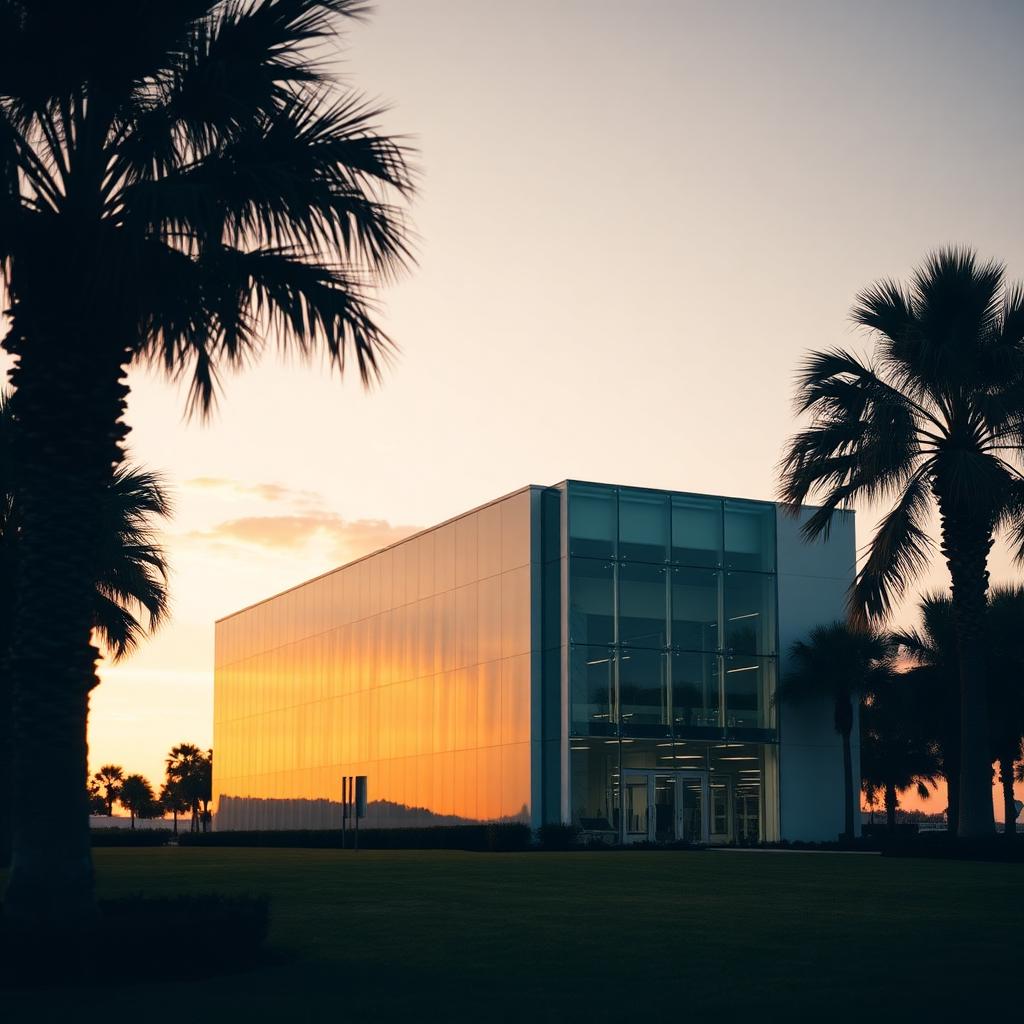
A data center is a warehouse-sized building full of computer servers. That's it. No smokestacks, no assembly lines, no shipping docks running around the clock. Rows of powerful computers, stacked in racks, running 24 hours a day.
Those servers are the physical reality behind almost everything you do on a phone or laptop. When you stream a movie, the video file lives on a server in a data center. When you check your bank balance, a data center processes it. Your family photos "in the cloud"? They're on a hard drive in a building like this. The cloud is not a cloud. It's a building, increasingly, a building in Florida.
What's Inside
Walk through a modern data center and you'll find four main systems:
The servers. Thousands of computers in long rows of racks, storing data, running websites, and increasingly, running artificial intelligence models.
The cooling. Computers generate heat, and too much heat destroys them, so a large share of the building is dedicated to keeping servers cool. This is the system that determines a facility's water use, and designs vary enormously. Older evaporative systems consume large volumes of water, while newer "closed-loop" systems fill once and recirculate, and some new Florida projects are designed to be nearly water-free.
The power infrastructure. Data centers use a lot of electricity. On-site substations and transformers deliver it, and backup generators stand by for outages. Who pays for that power, and whether it touches your bill, is governed in Florida by a new state law. Florida Senate Bill 484 (SB 484) prevents large-scale data centers from shifting their high energy and infrastructure costs onto everyday consumers. This bill was signed into law by Governor Ron DeSantis on May 7, 2026, and became effective July 1, 2026.
The security and network layer. Fenced perimeters, badge access, and fiber-optic connections linking the building to the wider internet.
What you won't find: crowds. A large data center typically runs on a permanent staff of 50 to 200 people, mostly technicians, engineers, and security personnel. That's why we never lead with jobs claims. The honest case for these facilities is capital investment and tax base, not payroll.
Why They're Suddenly Everywhere
Two forces collided. First, everyday life kept moving online. Just about every business, school, and government service now runs on remote computing. Second, artificial intelligence arrived, and AI is extraordinarily compute-hungry. Training and running AI models requires warehouse-scale computing power, and the federal government now treats domestic AI computing capacity as critical infrastructure.
The result: North American data-center vacancy hit a record low of roughly 1.4% in 2025, per CBRE. Demand is outrunning supply nationally, and companies are looking beyond the traditional hubs — Northern Virginia, Dallas, Silicon Valley — for places with power, land, and connectivity. Which brings us to Florida.
Why Florida
Florida's advantage isn't cheap land or tax breaks. It's geography —specifically, undersea geography.
More than 95% of America's international data traffic travels through submarine fiber-optic cables, per the FCC, and Florida ranks first in the nation for cable landings. Miami's NAP of the Americas is the primary internet exchange point connecting the U.S. to Latin America and the Caribbean. And in Palm Coast, a new campus anchored by Google's transatlantic "Sol" cable will give Florida its first direct fiber connection to Europe since 1999, expected operational in early 2027.
In plain terms: Florida is the digital front door between the Americas and, soon, Europe again. Data centers want to be near the door.
Add the supporting cast: the fastest population growth of any major data-center state since 2020, the University of Florida's HiPerGator (recently ranked the third-fastest supercomputer in the world), and Miami's growing finance and tech base, and Florida is already the fourth-largest data-center market in the country. Not a speculative bet. An existing reality that's now accelerating.
The conversation worth having
None of this means every project belongs everywhere. Florida communities are asking hard questions right now about water, noise, electricity costs, and transparency and those questions deserve straight answers, not talking points. Some proposals have been reshaped by resident input; at least one large project was withdrawn entirely after a planning board said no. Under Florida law, your county commission holds that zoning authority, and it's real.
That's what this site is for. We're FDISA — the Florida Digital Infrastructure and Security Alliance — and our bet is simple: Florida's digital growth goes best when everyone involved actually understands what's being built, what the rules are, and what the evidence says, caveats included.
Start with our FAQ: nine questions Floridians are actually asking, answered with sources including the answers that are genuinely complicated.
Sources for this post: FCC / Submarine Networks (cable traffic and landings); CBRE Research (vacancy); Flagler County Government (Palm Coast / Sol cable); University of Florida (HiPerGator); Florida Specifier (market rank); U.S. Census via Brightlio (population growth).
FDISA materials are provided for general informational and educational purposes only and do not constitute legal, tax, engineering, environmental, energy, regulatory, or other professional advice.