
News
Five takeaways from Florida TaxWatch's data center report
September 30, 2026 · FDISA
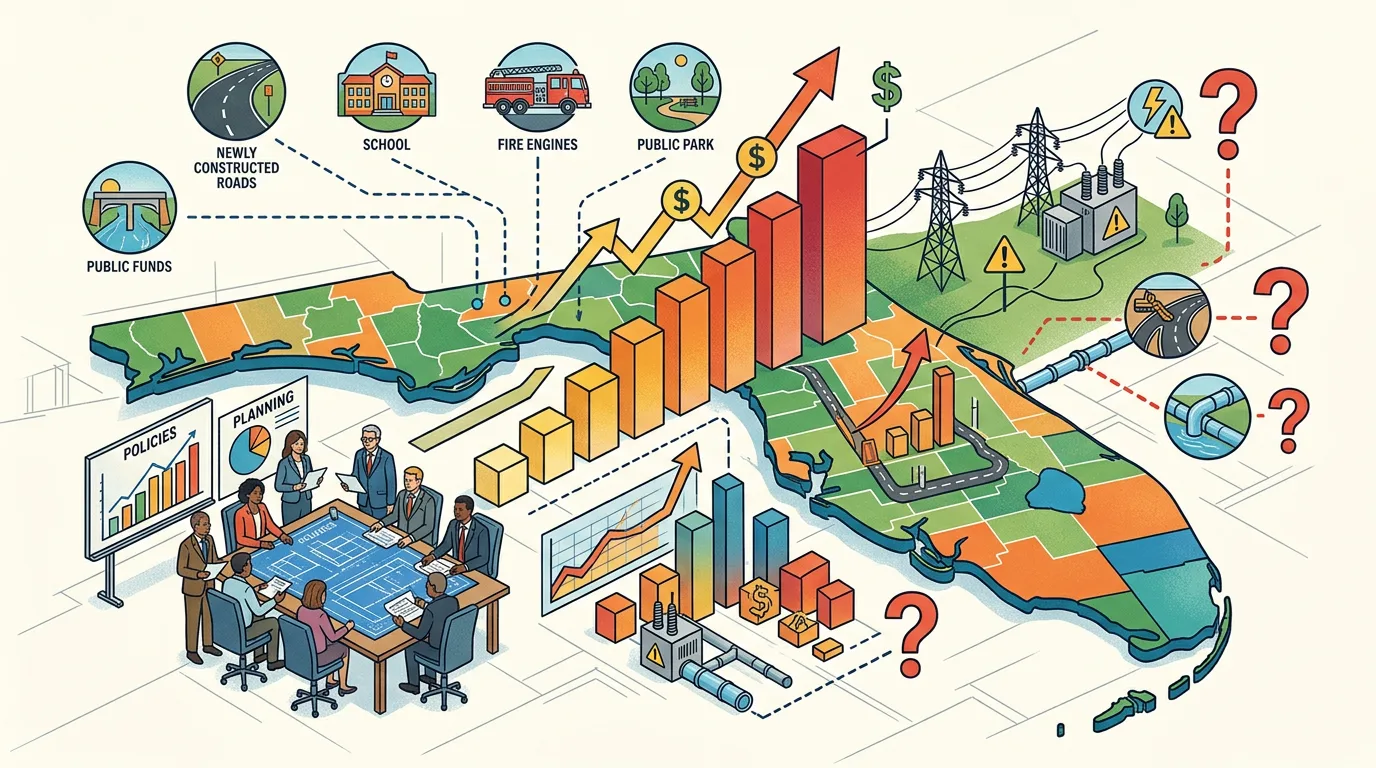
Florida communities weighing data center development have a significant new resource.
Florida TaxWatch has released an independent analysis examining what a hypothetical large-scale data center could mean for Florida’s tax base, along with lessons from states that have already experienced significant data center development.
The report comes as communities across Florida are considering proposals, policies and, in some cases, temporary pauses on new development. It puts Florida-specific numbers behind some of the potential benefits while also examining questions around power, water, infrastructure and taxpayer protection.
The full report deserves a read. Here are five findings that stood out to us. Over the coming weeks, we’ll take a deeper look at each and what it could mean for Florida communities.
1. The fiscal impact could be substantial, and most of it stays local
Florida TaxWatch modeled a hypothetical $10 billion, 500-megawatt hyperscale data center over an eight-year period encompassing construction and initial operations.
The analysis estimates the facility could generate more than $1 billion in cumulative state and local tax revenue over those eight years. Approximately 94.2% of the modeled revenue would go to local taxing entities.
Much of that value comes from the capital-intensive nature of data centers. Buildings, servers, cooling systems, generators and other equipment can represent billions of dollars in taxable investment.
That distinction matters. Data centers are not traditional economic development projects built primarily around large permanent workforces. A significant part of their potential local economic value comes from expanding the property tax base.
TaxWatch is also careful to describe its figures as estimates, not projections. Actual revenue would depend on project size, taxable value, depreciation, millage rates, incentives, timing and other factors.
2. That tax base could take on added significance as Florida considers Amendment 3
Florida voters will consider Amendment 3 this November, which would significantly increase the homestead exemption for non-school property taxes if approved.
Florida TaxWatch, citing the Revenue Estimating Conference, estimates the amendment would reduce local property tax collections by billions of dollars statewide. Commercial property, including data centers, would not receive the homestead exemption.
That makes TaxWatch’s analysis of the commercial tax base particularly timely. The report compares the potential revenue from its hypothetical data center with the estimated effects of Amendment 3 and finds that the modeled property tax revenue would exceed the estimated Amendment 3 reduction for most local governments, and by a wide margin in the average fiscally constrained county.
FDISA takes no position on Amendment 3. But the analysis illustrates a broader point: the composition and diversity of a community’s tax base can have important implications for its ability to fund local services.
3. Due diligence has to come before development
The potential revenue is only part of TaxWatch’s analysis.
The report explicitly cautions local leaders not to assume that every proposed data center will match the scale, value or revenue generation of its hypothetical model. It also warns that a large potential tax base does not automatically make a particular site appropriate.
Infrastructure is a central consideration. Data center construction can move more quickly than the generation, transmission, water, transportation and other infrastructure necessary to support it.
Water presents another site-specific question. Cooling technologies can have very different water and energy requirements, and the right approach depends on the facility, technology and local resources.
The message for communities is straightforward: understand the project, its resource requirements, infrastructure needs and fiscal implications before making a decision.
4. Other states offer Florida some clear lessons
Florida is not the first state to grapple with rapid data center growth. TaxWatch examined experiences elsewhere and identified four lessons for Florida policymakers and local officials.
First, hold ratepayers harmless. Large-load customers should bear the costs they create rather than shifting those costs to residential and small-business customers. Florida's SB 484 was designed to ensure this is the case.
Second, plan before demand arrives. Generation, transmission, water, transportation and other infrastructure needs should be identified before development outpaces the systems required to support it.
Third, match water strategy to place. Reclaimed water, closed-loop cooling, onsite storage and other approaches involve different tradeoffs. Water planning should reflect the particular facility and community.
Fourth, manage fiscal concentration. Significant new recurring revenue can benefit a community, but TaxWatch cautions local governments against becoming overly dependent on a single source or immediately committing new revenue to recurring expenses.
These are practical lessons Florida can consider while much of the state’s data center development is still ahead.
5. Responsible development starts with clear standards
TaxWatch ultimately recommends a data-driven framework for evaluating individual proposals. It asks local leaders to consider whether a project protects taxpayers, is appropriately sited and produces durable public value.
Many of the issues highlighted in the report, including ratepayer protection, infrastructure planning, water and siting, are also addressed separately in FDISA’s Model Data Center Ordinance.
The model ordinance gives local governments an adaptable starting point for establishing expectations around issues including siting, setbacks, noise, water, utility coordination, traffic, emergency planning, transparency and decommissioning.
Clear standards give communities a framework for evaluating proposals consistently, understanding their impacts and determining whether development makes sense for that location.
Florida TaxWatch has added important Florida-specific research to a fast-moving conversation. Over the coming weeks, we’ll dig deeper into each of these five areas, including what the fiscal numbers mean for local communities, lessons from other states and practical approaches to responsible development.
Read the full Florida TaxWatch report: https://floridataxwatch.org/data-centers-and-floridas-tax-base-balancing-fiscal-opportunity-responsible-development-and-taxpayer-protection/
View FDISA’s Model Data Center Ordinance: https://www.fdisa.org/model-ordinance
FDISA materials are provided for general informational and educational purposes only and do not constitute legal, tax, engineering, environmental, energy, regulatory, or other professional advice.