
The truth about data centers and water
Water is the first objection at every data center hearing. Modern cooling and Florida's permitting law both look different from the assumption driving it.
Updated September 1, 2026
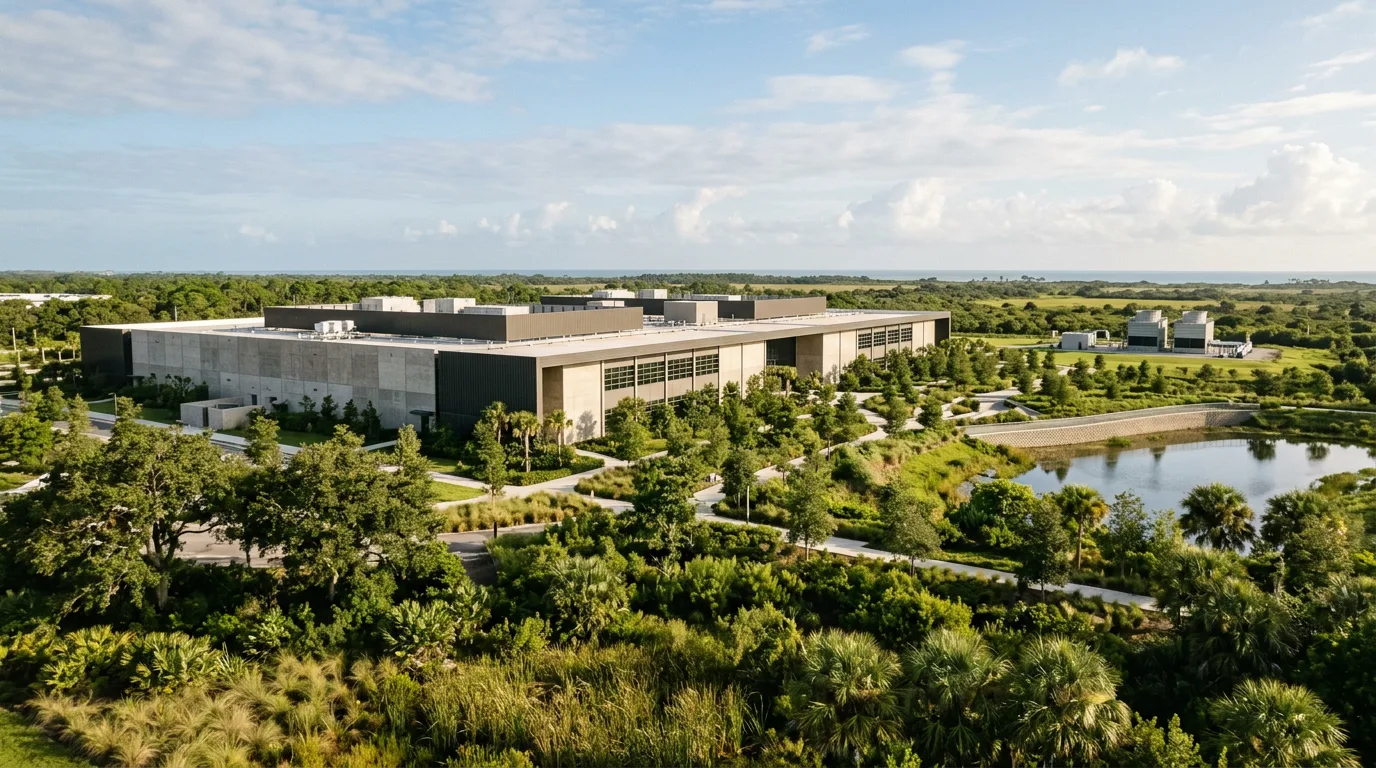
Water is the objection that comes up first at every data center hearing, and it's also the one built on the shakiest ground. The image driving public concern, a facility silently draining millions of gallons a day, describes technology the industry is moving away from, not the technology being built today. Florida's permitting process already accounts for this, with legal requirements that are stricter than most residents realize until they see them in writing.
Modern cooling looks nothing like the older stereotype
The multimillion-gallon-a-day figures that circulate publicly are often associated with facilities that rely heavily on evaporative cooling. Newer facilities increasingly use direct-to-chip or immersion cooling, closed-loop systems and air-cooled designs that can dramatically reduce water consumption. Some designs can use almost no water for cooling.
Cooling technology is one of the biggest factors determining a site's water footprint. A modern, well-designed facility and one relying heavily on evaporative cooling can look completely different on paper even at similar computing capacity, as the chart below shows. The technology choice, not the fact that it's a data center, is what drives the number.
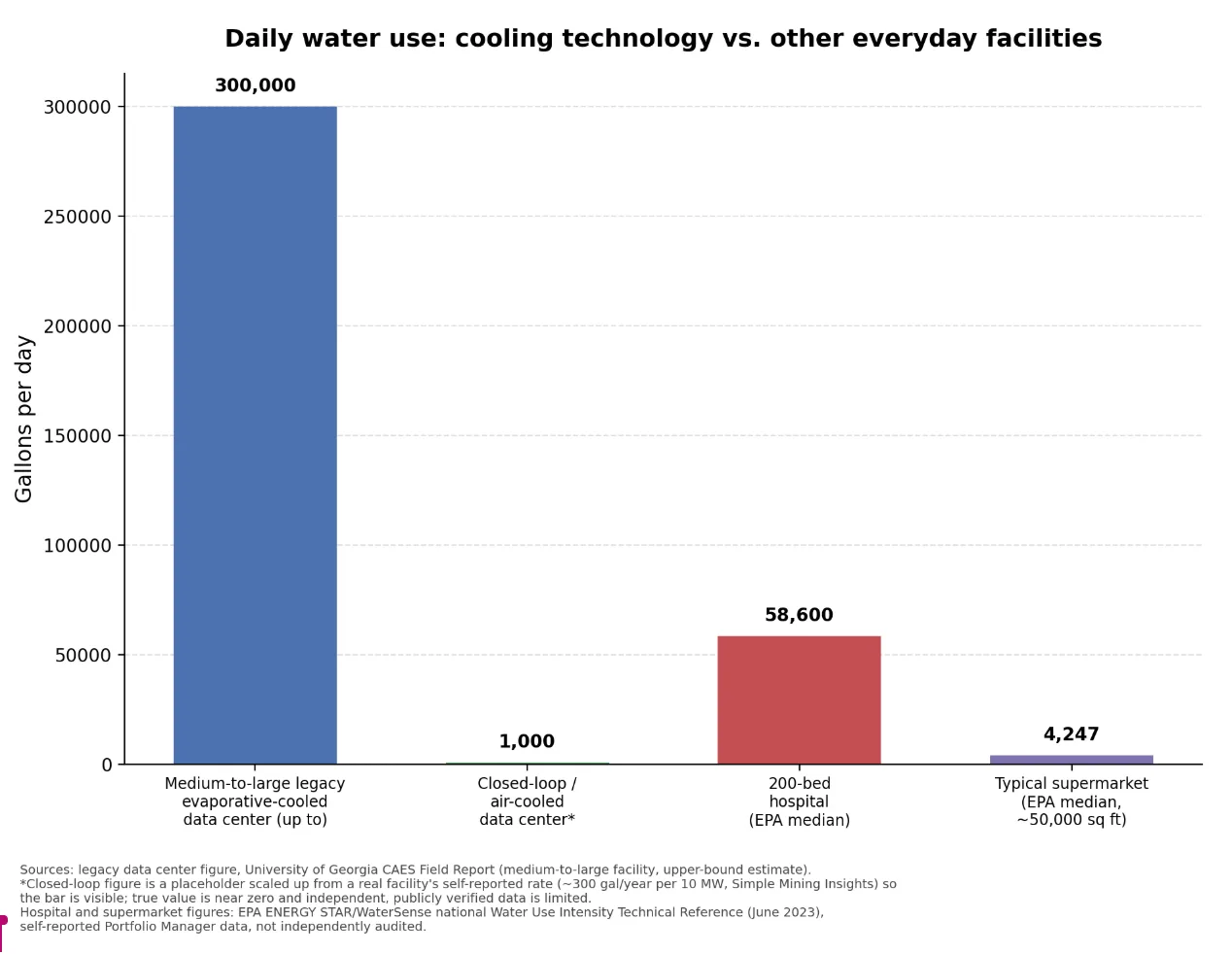
A medium-to-large legacy data center relying on evaporative cooling can use several times more water in a day than a 200-bed hospital or a typical supermarket. A closed-loop or air-cooled facility uses next to nothing. The technology choice, not the industry, is what determines the footprint.
Florida's permitting process has real teeth
Under Florida law, large-scale data centers, defined as facilities with an anticipated monthly peak electrical load of at least 50 megawatts, face specific requirements when seeking permits to withdraw water.
When suitable reclaimed water is available at the property boundary and meets the law's environmental, economic, technical and permitting conditions, water regulators must require its use in place of some or all of the proposed groundwater or surface-water withdrawal.
Consumptive use permits can be denied outright if a proposed withdrawal would harm local water resources. And when a large-scale data center seeks at least 100,000 gallons per day, its application must include detailed accounting of its water sources and uses and a water conservation plan addressing cooling-water recycling, leak detection and repair, water-efficient fixtures and other conservation measures.
A large-scale data center's permit also cannot be approved without a hearing.
This is a permitting process with statutory conditions, public review and denial authority built in, layered on top of whatever standards apply at the county level.
The bottom line
Florida isn't taking anyone's word for it on water. The law requires conservation planning, gives regulators the power to mandate reclaimed water, and lets them deny a permit outright, before a facility ever draws its first gallon. Pair that framework with where cooling technology is headed, and the water-intensive image driving so much public concern describes yesterday's data center, not the one actually being proposed. The evidence, not the assumption, should be what shapes this conversation.
FDISA materials are provided for general informational and educational purposes only and do not constitute legal, tax, engineering, environmental, energy, regulatory, or other professional advice.